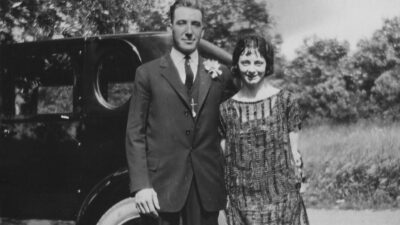
Early Life in South Boston
John P. Bulger, often called Jackie, emerged from South Boston’s compressed social world during the late 1930s. He was born around 1938 into a household marked by discipline, scarcity, and fierce family allegiance. His father, James J. Bulger Sr., worked as a laborer with Newfoundland roots. His mother, Jane Veronica McCarthy Bulger, held the domestic center together. Their home produced three sons who would travel radically different routes.
The neighborhood shaped him before institutions did. Mary Ellen McCormack, the housing project tied to his upbringing, bred exacting loyalties and hard judgments. In such quarters, reputation could weigh more heavily than status. Survival depended on caution, memory, and an instinct for reading power. Jackie Bulger learned that civic life and family life were often entangled.
His brothers became far more famous. James “Whitey” Bulger entered the criminal underworld and later became a national symbol of violent evasion. William “Billy” Bulger climbed into Massachusetts politics and attained high office. John P. Bulger stayed closer to the machinery of government. That choice made him less visible, but not less consequential.
A Career Built on Procedure
Bulger entered Commonwealth employment in 1964. He began in the slow, methodical world of public administration. Such work rarely draws celebration. Yet it relies on steadiness, exactness, and a strong appetite for rules. These are not trivial virtues in a court system.
His career reached its height in June 1982. He was appointed clerk magistrate of the Boston Juvenile Court. That office required command of records, schedules, filings, and legal formality. It also demanded discretion. Juvenile court work sits near the intersection of authority and vulnerability, where clerical decisions can alter daily life for families and young defendants.
He remained there for nearly 19 years. By ordinary measures, that was a durable public career. He served until April 27, 2001, when he retired on superannuation. The timeline looks quiet on paper. In retrospect, it stood just before his private loyalties collided with federal scrutiny.
The Federal Case
The legal collapse came in 2001. On November 8 of that year, John P. Bulger was indicted on two counts of perjury and two counts of obstruction of justice. The case centered on testimony he gave concerning his fugitive brother. Prosecutors were examining money trails, safe deposit boxes, and contacts linked to Whitey Bulger’s years in hiding.
The matter was not merely familial embarrassment. It was a direct challenge to the duties of candor imposed on a public servant. A clerk magistrate is expected to respect the architecture of law. When testimony becomes evasive or false, the contradiction is severe. The court system does not treat that as a minor lapse.
Bulger pleaded guilty on April 10, 2003. He admitted all four counts. That plea transformed a protracted investigation into formal conviction. In September 2003, he was sentenced to six months in custody, six months of home confinement, three years of supervised release, and a fine. The punishment was limited in duration, but not in symbolic force.
His case drew attention because of the family name. Boston had long known the Bulger family as a study in divergent forms of influence. One brother moved through politics, one through organized crime, and one through the courthouse. The federal case fused those histories into a single legal problem. It revealed how family loyalty can become evidence.
The Pension Dispute
Bulger’s trouble did not end with the sentence. A separate fight opened over his state pension. He had already begun receiving retirement payments after leaving office in 2001. Reports at the time placed the monthly amount near $5,300. The benefit became contested after his criminal conviction.
The state argued that his offenses triggered pension forfeiture. The relevant statute concerned crimes tied to official duties. That question moved through multiple courts. In 2004, a Boston Municipal Court judge restored the pension. The ruling did not settle the matter. It merely postponed the final answer.
The Massachusetts Supreme Judicial Court settled it in 2006. The court held that perjury and obstruction, as committed by Bulger, were violations of laws applicable to his office or position. That made forfeiture mandatory. The ruling had a stern, almost mechanical quality. Public trust, once breached in office, could not simply be monetized into retirement security.
The case also raised the prospect of clawing back substantial sums. Reports discussed figures near $243,000 as the amount beyond his contributions. That detail mattered because pensions are often treated as earned property. Here, the court decided that public service does not shield public dishonesty. The legal result was unambiguous.
Family Ties and Public Identity
The Bulger family cannot be understood through John P. Bulger alone. Their household produced strikingly different forms of authority. Whitey Bulger became infamous for criminal violence and long fugitive concealment. Billy Bulger became a dominant political operator. Jackie remained a bureaucrat whose name only later drew broad attention.
| Family Member | Public Identity | Notable Years |
|---|---|---|
| James J. Bulger Sr. | Laborer | Early 20th century |
| Jane Veronica McCarthy Bulger | Matriarch | Early 20th century |
| James “Whitey” Bulger | Organized crime figure | 1929 to 2018 |
| William “Billy” Bulger | Massachusetts politician | Born 1934 |
| John P. Bulger | Clerk magistrate | Born around 1938 |
This family structure made John P. Bulger unusual in a literary sense. He was neither the celebrated politician nor the notorious outlaw. He was the administrative son, a man of records and procedure. That role can seem modest until one sees how law depends on people who maintain it quietly. His life illustrates how the ordinary arms of government can still become entangled in exceptional scandal.
Public reporting about his spouse or children has remained sparse. That absence is itself notable. Not every family member of a notorious clan becomes part of the public archive. Some remain partly shielded, even when the surname is endlessly discussed. In his case, the record emphasizes office, indictment, and pension rather than domestic detail.
Later Attention and Historical Framing
John P. Bulger rarely stood alone in the news cycle. Later coverage of the Bulger family usually revolved around Whitey. Whitey’s 2011 capture after 16 years on the run, his 2013 convictions, and his 2018 prison killing kept the family name in circulation. Those events also revived older questions about silence, loyalty, and institutional failure.
John P. Bulger’s story occupies a narrower corridor of public memory. He appears in legal histories, pension disputes, and family retrospectives. That narrower profile does not make the case trivial. It makes it instructive. He represents the kind of official whose career seems routine until a single legal rupture changes the meaning of the whole record.
His life also reflects the stern logic of public employment. Service can be long, competent, and respected, yet still be overtaken by misconduct. Courts and pensions do not read sentiment into statutory breaches. For public employees, the consequences of false testimony can extend beyond sentencing. They can reach retirement, reputation, and the legal definition of integrity.
Timeline of Major Events
| Date | Event |
|---|---|
| c. 1938 | Born in South Boston |
| 1964 | Began work for the Commonwealth of Massachusetts |
| June 1982 | Became clerk magistrate of the Boston Juvenile Court |
| April 27, 2001 | Retired from public service |
| November 8, 2001 | Indicted on perjury and obstruction charges |
| April 10, 2003 | Pleaded guilty to all counts |
| September 2003 | Sentenced to custody, home confinement, supervised release, and a fine |
| 2004 | Lower court reinstated pension |
| 2006 | Massachusetts highest court ordered forfeiture |
This chronology shows how quickly a stable career can be reinterpreted. For decades, Bulger’s name belonged to a courthouse file drawer. After 2001, it belonged to federal law, appellate review, and family history. Dates that once marked routine milestones became markers of reversal.
Key Takeaways
John P. Bulger was a long serving Massachusetts clerk magistrate whose career ended in disgrace. He was convicted of perjury and obstruction of justice after giving false testimony about his brother. His sentencing was limited, but the legal and reputational consequences were broader. The pension case became especially important because it clarified that official misconduct can forfeit retirement benefits. His life is best understood as a study in bureaucratic duty, family allegiance, and the unforgiving standards applied to public office.