Early Life and Family Setting
Rodney Ramone Hill III grows up inside a family where music is not background noise. It is a living inheritance. His mother is Monica, known publicly as Monica Denise Arnold, and his father is Rodney Ramone “Rocko” Hill Jr. That pairing places him near two distinct musical traditions from the start. One side carries R&B polish. The other carries Atlanta rap energy. The result is a childhood that feels visibly shaped by rhythm, stagecraft, and public attention.
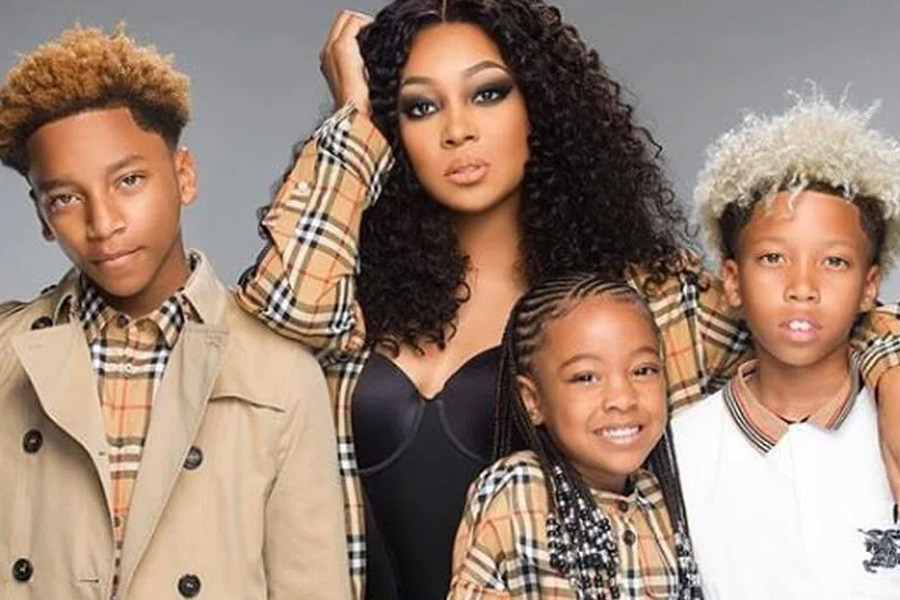
He is also surrounded by siblings and close relatives who make the family feel layered rather than singular. Romelo Montez Hill appears as his brother. Laiyah Shannon Brown is his half-sister. Ramone Malik Hill is his half-brother. Marilyn Best appears as a grandmother with a stabilizing presence in family images. These relationships matter because they frame Rodney III as part of an ensemble, not an isolated figure. The family story has breadth, and he occupies a clear place within it.
The public record around him is still selective. That selectivity gives the available details a particular weight. A few birthdays, a few photographs, a few family gatherings can carry more narrative force than pages of formal biography. In his case, the small details are enough to sketch a vivid social outline. He appears as a child of visibility, but not yet of full public career definition.
A Household Shaped by Music
Monica brings a long-established musical identity into the picture. Rocko brings a parallel identity from rap and industry circles. That combination creates a home environment where artistic language likely feels ordinary. Studio talk, performance schedules, image management, and fan attention would all sit close to daily life. For a young person, that kind of setting can become formative early.
Rodney III is often described through signs of emerging creative curiosity. Music and production are the recurring terms. Those words suggest experimentation more than formal release. He appears to be in an apprentice phase, where listening and trial matter more than public cataloging. Many artists begin with exactly that kind of inchoate interest. They build instinct before they build audience.
The idea of a bedroom studio is useful here. It conveys scale, but also aspiration. A laptop, a small interface, a few software tools, and a private ear can form the first workshop. That is often where a future direction becomes legible. In Rodney III’s case, the public material implies that music may already be part of his self-concept.
Public Appearances and Visible Milestones
Rodney III has appeared in family social posts and entertainment coverage tied to public events. These appearances are not the same as a formal professional biography. They are more like snapshots from an ongoing family archive. The images usually show group presence, celebration, or red carpet surroundings. They reveal proximity to celebrity life without fully converting him into a separate celebrity product.
A reported 16th birthday stands out as one of the clearer milestones. Age markers matter in public family narratives because they signal movement. Sixteen can suggest a shift from protected childhood toward personal identity and choice. For someone with artistic inheritance, that age often invites speculation about the next move. The public record does not confirm a finished path. It does suggest an opening.
The appearance record also matters because it creates continuity. One image alone says little. Several images across birthdays and events establish pattern. Pattern is often what biography needs before certainty arrives. In Rodney III’s case, the pattern is one of family visibility, social celebration, and gradual maturation.
| Public Context | What Appears Visible |
|---|---|
| Birthday celebrations | Large family gatherings and public attention |
| Entertainment events | Family group photos and polished appearances |
| Social media posts | Repeated inclusion in family imagery and short clips |
The Shape of the Family Narrative
The family narrative has a particular cadence. Monica’s musical legacy gives it gravity. Rocko’s presence gives it urban texture and momentum. The children, including Rodney III, contribute a future-facing dimension. Together, they form a generational arrangement that feels both intimate and public. That tension is common in entertainment families, but each family expresses it differently.
Rodney III appears to be the eldest among several siblings and half-siblings. That position often carries symbolic weight. Eldest children are frequently read as early inheritors of family memory. They are the ones who most visibly bridge the first chapter and the next. In a family where public visibility is already established, that bridge can become especially noticeable.
Marilyn Best, as grandmother, adds another layer of continuity. Grandparents often function as quiet custodians of family texture. In photographs, they can ground a scene that might otherwise feel performative. That grounding matters. It reminds the viewer that public life still rests on private continuity. The family images suggest not just fame, but lineage.
Emerging Creative Direction
The phrase emerging interest in music deserves attention because it is modest. It does not promise a career. It does not inflate a teenager into a finished brand. It signals inclination, which is often more telling than hype. Interest can become discipline. Discipline can become craft. Craft can later become a public body of work.
Public commentary around Rodney III tends to use verbs like exploring, rapping, and producing. Those are active verbs, but they remain provisional. They imply movement rather than arrival. That is a sensible way to frame a young person with creative curiosity. The available details do not support claims of a mature discography. They do support the idea that music is already in play.
This kind of early stage often looks messy from the outside. It is usually less polished than people expect. A young creator may test beats, record fragments, and discard many attempts. That process is not decorative. It is the labor of finding a voice. Rodney III appears to be somewhere inside that labor, rather than beyond it.
What the Public Record Does Not Show
The most important gaps are also the most instructive. There is no credible public estimate of his personal net worth. There is no confirmed full discography. There is no precise birthdate presented in the available material. Those absences matter because they keep the portrait honest. They prevent false certainty from colonizing the narrative.
In celebrity-adjacent biographies, absence can be informative. It tells you what kind of person the public is allowed to observe. It also tells you how incomplete public knowledge remains. Rodney III is visible in family contexts, yet still protected by the ordinary limits of youth. That balance is not unusual, but it is worth naming.
| Private Detail | Public Availability |
|---|---|
| Exact birthdate | Not publicly confirmed here |
| Personal net worth | No credible estimate available |
| Full discography | Not publicly established |
| Independent career profile | Still developing |
Why His Story Resonates
Rodney III’s story resonates because it is recognizably contemporary. Many modern biographies begin with images before credits. A person can be known through family posts, event photographs, and milestone celebrations long before professional authorship solidifies. That is especially true for children of public figures. Visibility arrives early. Definition arrives later.
There is also a cultural fascination with inheritance. People want to know what a child absorbs from famous parents. They ask whether talent repeats, mutates, or resists transmission. Rodney III sits inside that question without needing to answer it yet. His upbringing suggests access to music, discipline, and public language. It does not force a singular destiny.
The atmosphere around him is therefore the most revealing part. He seems to inhabit a world where performance is familiar, family matters are visible, and creative exploration is plausible. That combination can produce several futures. The public record simply shows the opening conditions. It leaves the rest unwritten.
Key Takeaways
Rodney Ramone Hill III is the son of Monica and Rodney Ramone “Rocko” Hill Jr. He is publicly visible through family posts, milestone celebrations, and event appearances. His siblings and close relatives place him inside a wide, multigenerational family structure. His public profile suggests an early interest in music and production, but not a formal career catalog. A reported 16th birthday marks a notable transition point. No credible public estimate of his net worth is available.