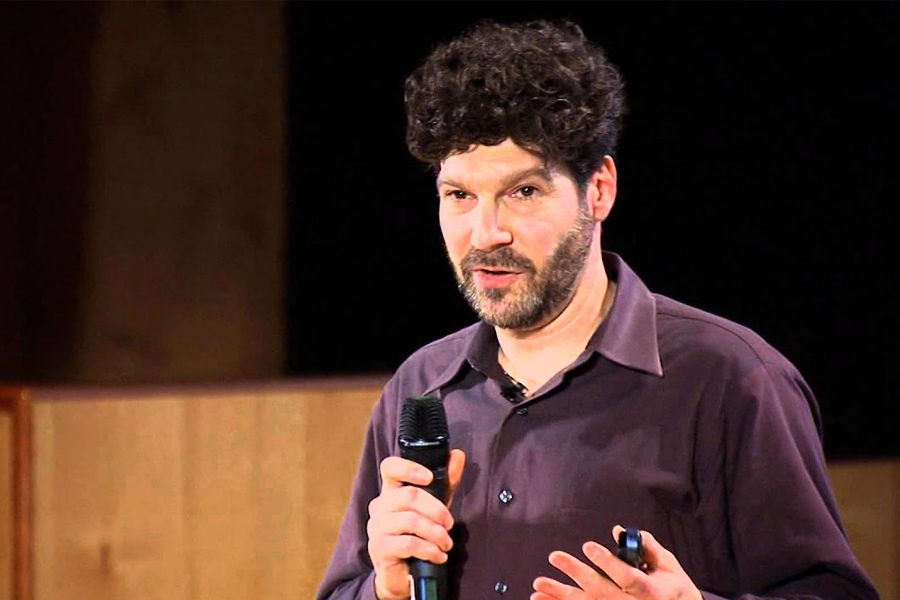
A Scientist Formed by Evolutionary Thinking
Brett Weinstein was born in 1969 in Los Angeles, California. His early life eventually pointed toward biology and adaptive reasoning. He studied at the University of Pennsylvania, then at the University of California, Santa Cruz. Later, he earned a PhD in evolutionary biology from the University of Michigan. That educational sequence shaped his intellectual temperament. He learned to examine organisms, systems, and pressures with careful precision. He often treats modern life as a living network with reciprocal constraints. That perspective remains central to his public commentary today.
His academic training was not ornamental. It furnished him with a durable framework for interpreting change. Evolutionary biology rewards patience, pattern recognition, and discomfort with simplistic answers. Weinstein appears to carry those habits into every major discussion. He often speaks as though incentives, adaptations, and trade offs govern nearly everything. That analytical style makes him distinct among contemporary commentators. He rarely sounds like a performer chasing applause. Instead, he sounds like a researcher tracing structural causes.
Academic Life at Evergreen State College
For many years, Weinstein taught biology at Evergreen State College. That period anchored his identity in ordinary academic labor. He was not initially known as a media figure. He was a professor, researcher, and classroom teacher. His scholarly interests included evolutionary ecology and reserve capacity. Those topics reflect his curiosity about resilience under strain. He was drawn to systems that preserve function despite pressure. That interest later mirrored his public commentary on institutions and society.
His work at Evergreen lasted from 2002 to 2017. That long span gave him institutional familiarity. He understood how colleges function from the inside. He knew the routines, expectations, and cultural assumptions of academic life. His experience therefore shaped his later criticism of higher education. He did not speak as an outsider guessing at university dynamics. He spoke as someone who had lived them for years. That background gave his later remarks more texture and credibility among supporters.
The academic phase of his life also included collaboration with Heather Heying. Their shared scientific interests were already visible during those years. They were not merely adjacent colleagues. They developed a partnership built on scholarly overlap and mutual inquiry. Their connection became a recurring feature of his professional identity. It eventually expanded far beyond the university setting. Their intellectual union would later define much of his public work.
The Evergreen Turning Point
The year 2017 marked a decisive rupture in Weinstein’s life. He became widely known during the Evergreen controversy. That conflict transformed him from a professor into a nationally recognized figure. It also recast him as a symbol in broader debates. Free speech, institutional authority, and campus norms suddenly converged around his name. The episode was more than a local dispute. It became a cultural flashpoint with nationwide visibility.
After that moment, his public role changed permanently. He no longer occupied only the academic sphere. He entered interviews, podcasts, debates, and public lectures. The transition was abrupt and consequential. It placed him inside larger conversations about legitimacy and dissent. Many people now associated him with speech rights and institutional critique. Others saw him as a controversial critic of prevailing norms. Either way, the turning point enlarged his audience dramatically.
This shift also altered the scale of his influence. University classrooms are limited chambers. Public media can amplify a voice across millions. Weinstein moved from one scale to another. That change reshaped his career and public perception. He became part of a broader pattern of professors entering civic controversy. Yet his case remained unusual because of its intensity. Few biology professors become recurrent subjects of national argument.
DarkHorse Podcast and Public Commentary
Weinstein later became known for the DarkHorse Podcast with Heather Heying. The show gave him a new platform for extended reasoning. It allowed him to explore science, culture, medicine, and institutional trust. The format suits his style well. He tends to build arguments slowly and cumulatively. He prefers layered explanation over compressed messaging. That method gives listeners room to follow complex ideas. It also reflects his background in scientific analysis.
The podcast became a major expression of his current work. It linked his biological training with cultural interpretation. He and Heying often apply evolutionary thinking to contemporary problems. They discuss human behavior, public policy, and technological change. Their approach often emphasizes hidden costs and unintended consequences. That orientation makes their conversations feel diagnostic rather than theatrical. They frequently ask what systems reward, distort, or conceal. Such questions remain central to Weinstein’s public identity.
He also coauthored A Hunter Gatherer’s Guide to the 21st Century with Heying. The book extends his view that modernity outpaces human adaptation. He argues that people remain shaped by ancestral conditions. That idea is one of his most durable themes. It informs his views on stress, confusion, and institutional malfunction. The book helped codify his public philosophy in written form. It also strengthened his reputation as a commentator with biological instincts.
Family, Partnership, and Intellectual Kinship
Weinstein’s personal life is unusually intertwined with his public work. His spouse, Heather Heying, is also an evolutionary biologist. She is a writer, podcaster, and coauthor. Their relationship combines marriage with long term scholarly collaboration. That blend makes their partnership especially visible. They met while both were at the University of California, Santa Cruz. Later, they worked together at Evergreen State College. Their shared trajectory deepened both their personal and professional bond.
Their collaboration is one of Weinstein’s defining features. They do not appear as an accidental duo. They present as a jointly formed intellectual team. Their conversations often move with shared assumptions and complementary emphases. That partnership has helped establish a coherent public voice. It also allows them to approach topics from multiple angles. One might describe their alliance as methodical and symbiotic. Each seems to sharpen the other’s perspective.
His brother, Eric Weinstein, is also a public figure. Eric is known for commentary, mathematics adjacent thinking, and wide ranging cultural reflection. The brothers share a fondness for ambitious ideas. They also share a willingness to question consensus narratives. Their public styles are not identical. Yet both inhabit the borderland between science, philosophy, and media. Their family background suggests that large conceptual thinking may be familiar territory. Brett’s public life therefore feels less isolated than it first appears.
A Style Built on Systems Trade Offs and Limits
Weinstein’s public style is notable for its density. He rarely speaks in slogans alone. Instead, he frames arguments through systems, incentives, and adaptive pressures. That approach can be demanding for listeners. It also offers a richer architecture of thought. He often asks what survives, what decays, and what hidden price accompanies apparent progress. This makes his commentary feel ecological in spirit. He treats society as dynamic and fragile, not static and self repairing.
His emphasis on reserve capacity is especially revealing. In biology, systems need slack to absorb shock. Weinstein applies that logic to institutions and communities. He worries about brittleness, overspecialization, and overconfidence. Those concerns recur across his commentary. He often implies that modern life is overly optimized for the present. That can make systems efficient but precarious. His audience tends to appreciate this line of reasoning. It offers a vocabulary for describing unease with precision.
He also occupies a unique position among public intellectuals. He emerged from science, not politics or entertainment. That origin gives him a different rhetorical texture. He often sounds analytical rather than partisan. At the same time, his criticism can be sharp and provocative. This combination has made him both admired and contested. He remains difficult to classify neatly. That ambiguity is part of his enduring relevance.
Recent Presence and Continuing Reach
Even after the Evergreen controversy, Weinstein stayed publicly active. He continued giving interviews, lectures, and podcast conversations. His visibility did not diminish. In some respects, it expanded. He became part of debates about education, expertise, and cultural instability. His work increasingly addressed broad civilizational questions. He treated institutional trust as a serious and vulnerable asset. He also examined how narratives harden into orthodoxy.
His relevance persists because he inhabits several worlds at once. He is a former professor, an author, a podcaster, and a public critic. He is also a biologist who continually interprets society through evolutionary thought. That combination gives him unusual range. It allows him to speak to academic audiences and general listeners alike. His public presence remains sustained by long form discussion. He seems most effective when time permits complexity. That makes his media style distinctive in a compressed age.
His timeline reveals steady transformation. In the early 2000s, he was primarily a working professor. By 2017, he had become a controversy figure. By 2019, he was podcasting regularly with Heying. By 2021, he had published a major book. By 2024 and beyond, he remained an active commentator. Each stage added another layer to his public identity. The arc is unusual, but coherent.
Key Takeaways
Brett Weinstein is an evolutionary biologist who became a public intellectual after 2017. His education at Penn, Santa Cruz, and Michigan shaped his systems based worldview. His years at Evergreen State College grounded him in academic life before public controversy altered his path. The DarkHorse Podcast and his book with Heather Heying expanded his reach. His marriage to Heying and his family connection to Eric Weinstein add further intellectual context. He remains influential because he treats modern life as a pressure filled adaptive system.